From a more secure White House to a modernized Dulles Airport, the president is determined to leave Washington better than he found it.
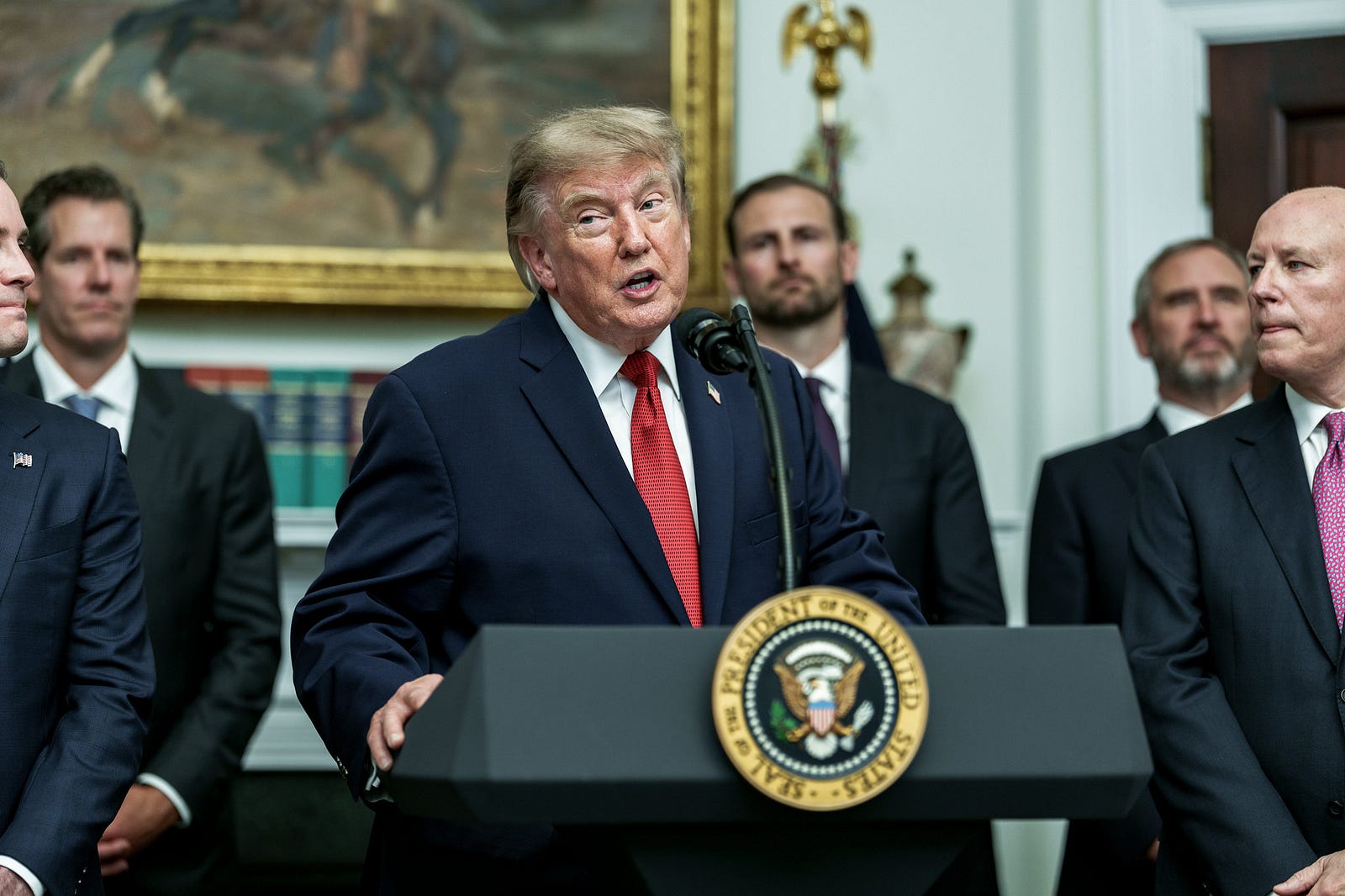
Donald Trump has always been a builder. During his second term, he has increasingly turned his attention to Washington itself, pursuing an ambitious collection of development projects intended to make the capital more functional, secure and impressive.
So far, the most visible — and controversial — is the new White House ballroom and East Wing complex. The project includes a 90,000-square-foot ballroom capable of accommodating major state dinners without the temporary tents presidents have traditionally erected on the South Lawn. Below it lies a far less decorative component: an extensive military and security facility designed to protect the president and other senior officials from modern threats.
The project has faced a lawsuit from the National Trust for Historic Preservation, which argues that Trump lacked authority to demolish the old East Wing and begin construction without congressional approval. A federal district judge agreed sufficiently to issue a preliminary injunction against most aboveground work, and a divided appeals court upheld it.
On Friday, however, Chief Justice John Roberts issued an administrative stay allowing construction to continue while the Supreme Court considers the administration’s emergency appeal. It was a meaningful victory for Trump, although not yet a final ruling on the ballroom’s legality.
The administration has several plausible arguments. Presidents have substantially altered the White House throughout American history. Franklin Roosevelt built most of the modern East Wing in 1942, including an underground air-raid shelter. Congress subsequently recognized presidential authority to make improvements and alterations to the Executive Residence.
Former Attorney General William Barr has also questioned whether the National Trust has standing to bring the lawsuit. Its case depends heavily on the claimed aesthetic injury of one member who regularly walks near the White House and objects to the ballroom’s effect on its historic appearance. Barr argues that federal judges should not become construction foremen based on the subjective displeasure of a passerby.
That argument may appeal to a Supreme Court increasingly skeptical of expansive standing theories. Still, Roberts’s order is only temporary. The full Court could extend the stay or permit the injunction to take effect.
Whatever the legal outcome, the ballroom answers a genuine need. The White House’s largest indoor reception room holds only about 200 seated guests. The government of the world’s leading nation should be able to receive foreign leaders without constructing what amounts to an elaborate party tent outside.
Security needs have also changed dramatically. Drones, cyberattacks, precision weapons and assassination attempts create dangers Roosevelt could scarcely have imagined when the East Wing’s original shelter was built.
The same practical reasoning supports Trump’s new South Lawn helipad. The incoming generation of Marine One helicopters is heavier and produces exhaust capable of damaging the lawn. The new permanent landing surface — approximately 100 feet wide and constructed from decorative granite — should improve drainage, resist heat and reduce recurring landscape repairs.
Some may question the ornate design or its reported $5 million to $6 million cost. Those are fair subjects for oversight. But a permanent landing area for the presidential helicopter is hardly a mere vanity project.
Trump has also converted the center of the Rose Garden into a paved patio suitable for outdoor receptions. Critics dislike the loss of grass, but the old lawn was repeatedly damaged by chairs, equipment and large gatherings. The renovation turns a fragile ceremonial garden into a more durable working space while preserving roses around its perimeter.
Elsewhere, the administration is restoring columns, replacing walkways and driveways, improving landscaping and updating security infrastructure. Trump has ordered a wider beautification effort covering federal buildings, monuments, fountains, parks and roads. He has made traditional and classical architecture the preferred style for federal construction in Washington — a welcome departure from the forbidding concrete boxes that dominated federal architecture for much of the past century.
More ambitious proposals are coming. Trump wants to build a 250-foot Independence Arch near Arlington Memorial Bridge and create a National Garden of American Heroes containing statues of approximately 250 notable Americans. The garden has received congressional funding, while the arch still requires extensive aviation, planning and historical review. Both could become impressive additions if constructed through a transparent legal process.
Trump’s instincts deserve some credit. Washington is not a museum piece that must remain frozen forever. It is a working capital that should be beautiful, functional and worthy of the country it represents. Yet the president’s impatience with bureaucracy sometimes creates avoidable controversy. Congress should authorize the ballroom, establish clear financial reporting and end the constitutional dispute without stopping necessary construction.
Beyond the White House grounds, other exciting improvements are coming to the District.
The Metropolitan Washington Airports Authority has approved a $19.9 billion modernization of Dulles International Airport, strongly promoted by Trump. The project will reconstruct the terminal, replace outdated concourses, build underground passenger-transit tunnels and finally begin retiring the lumbering mobile lounges.
Taken together, these projects reveal a coherent ambition. Trump wants to leave behind not only policies but physical improvements Americans can see and use. The legal and financial details require careful supervision, but Washington could emerge safer, more functional and considerably more impressive than Trump found it.
(Contributing writer, Brooke Bell)